



We’ve watched in growing amazement this morning as some Remain supporters have tried to spin last night’s election results as somehow representing a Remain victory. Much of it has been based on this batshit-mad graphic from the BBC website:

We’ll give you a moment to digest that one.
No, you haven’t lost your mind. The graph really DOES try to exclude the Tories from a count of “pro-Brexit” parties, as if they were somehow neutral on the issue. Yes, that IS absolutely demented. Yes, the state broadcaster HAS done it anyway. God knows why.
Add the Tories in and the figures become 44% for Brexit, 40% against. And of course, in reality you need to add Labour too, because no matter what most of its supporters and MPs might want, the party campaigned unequivocally and unambiguously on a platform of leaving the EU (just a bit more gently), making the total 58%.
But what the reality-deniers insist is that the result must somehow lead to a general election and/or a second referendum, in which Remain would win. So let’s pretend that that isn’t cobblers (although it is) and examine how it might theoretically happen.
For a general election, there has to either be a two-thirds majority in Parliament (no chance) or the government has to lose a vote of confidence. This seems stupendously unlikely. The Tories survived one in January by 19 votes, and would need the DUP to vote against them (not just abstain) to lose a new one.

The Tories have just recorded their worst election performance in around 150 years, and could not possibly expect to win any new election. They currently don’t even have a real leader, and won’t have for two months. It would be beyond insane for any of them to back a no-confidence vote and trigger an election before the end of July with their party in absolute chaos, and even more obviously ridiculous to do it after they’ve just elected a new leader.
Beyond a reasonable doubt an election in such circumstances would mean either Labour or the Brexit Party would be the biggest party – both nightmare options for every Tory MP, from Remainers to super-hardcore Brexiters, and also for the DUP.
So it’s all but impossible to see how a vote of no confidence could possibly pass. But if by some miracle it did, the mess it would create would be unimaginable.
Nobody can even begin to guess what policy Labour would campaign on. If they campaigned on a second referendum the electorate would be incandescent with rage – they’re already sick to death of being asked to vote on stuff and wouldn’t vote just for another vote.
(We don’t even know what sort of a second referendum Labour would actually want. What would be on the ballot paper? No deal? Remain? Some imaginary unicorn deal that the EU have endlessly said they’re not willing to negotiate? Two options, three options or more? What would the threshold for victory be if there were more than two?)
If on the other hand Labour campaigned on a straight “revoke Article 50” platform they’d be destroyed in their heartland seats in the north of England, and not make anywhere near enough gains elsewhere to compensate. They’d be fighting the newly-resurgent Lib Dems for the Remain vote, and would struggle to be seen as a credible Remain party under Jeremy Corbyn. And in the FPTP electoral system splitting the Remain vote in such a way would be fatal.
For Remain to win would need the Remain side to agree firstly on what that referendum would actually be, and then unite around a single party to vote for in the election to get it, and none of that is going to happen. Can you REALLY imagine the Lib Dems, freshly risen from the political grave, standing aside for Labour and gifting Jeremy Corbyn five years of power? Or vice versa?
The Brexit vote, however, would be unlikely to be split. We’ve already seen that Tory voters are profoundly out of patience waiting for Brexit to be delivered. The evidence suggests they’d make good on the explicit final warning they delivered last night and vote for the Brexit Party, as would the small rump of UKIP voters. Farage’s party would reach the tipping point at which FPTP would work in their favour and they’d end up with most seats and a mandate to have Farage in Downing Street.

(Remember, Labour won an absolute majority in 2005 on 35% of the vote. Last night the Brexit Party-plus-UKIP vote was 35%, and that’s without any more Tory defectors.)
This is not like 2014, when UKIP voters in the EU election knew perfectly well that they’d have to vote Tory in 2015 to get their referendum. This time Farage could credibly make a play for every seat in England, having swept almost every council area last night in a vote that was seen – just as a general election would be – as a proxy EU referendum. And we know he won’t be short of funding or airtime.
Leave voters would know with certainty that they had to vote Brexit Party this time or end up with at best another hung parliament unable to deliver Brexit, and years more torture for the entire country. Even some Remainers might vote TBP to avoid that.
There is simply no credible outcome of a general election that translates to a Remain win. That means the only way to turn what polls show is majority support for Remain into an actual vote would be a second referendum.
But for all the reasons above, that’s even more implausible than a general election. A second referendum has been repeatedly defeated in Parliament and there’s no sign that the rebel Labour MPs who scuppered it are about to change their minds.
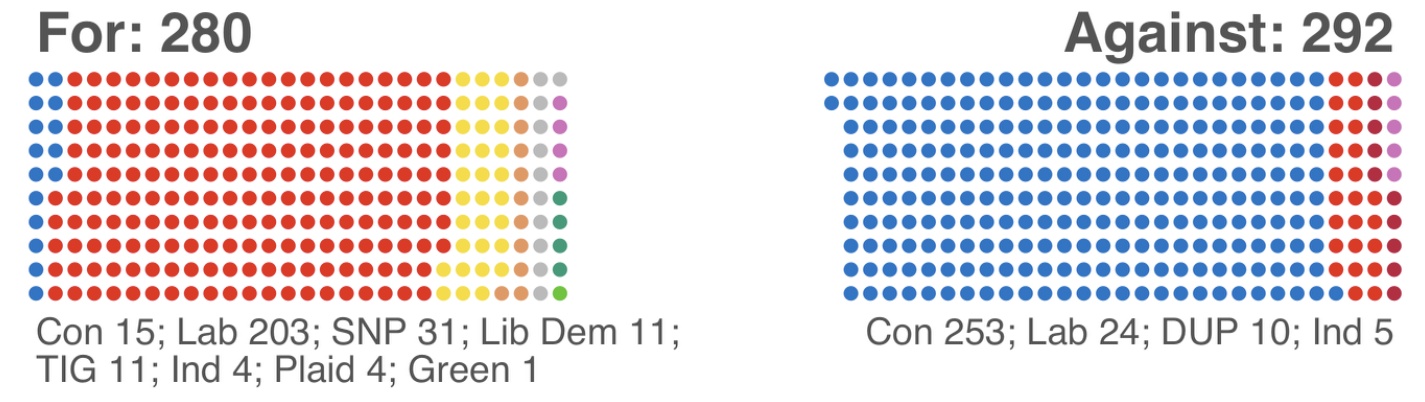
And in any event, the government simply doesn’t have to allow another vote on a second referendum at all. To the best of our knowledge there are no Parliamentary means by which one can now be forced. A confidence vote leading to an election is the only option, and we’ve dealt with all that already.
So the only plausible outcomes from here are these:
1. A new Tory leader is elected who is willing to whip his party for a second referendum, guaranteeing its death. Let’s generously call that a long shot at 1%.
2. A new PM asks the EU for another extension, dragging the whole process out for goodness knows how much longer with no real prospects of any meaningful progress – the EU has made it abundantly plain it will not renegotiate the deal. Like option (1) this would be suicide for the Tories, only slower.
It’s moderately conceivable that someone like Michael Gove might try it anyway, hoping for some external deus ex machina to save him in the next two years, but it’s questionable whether the exasperated EU would even go along with it if he did, and of course it would require Gove to win the Tory leadership election in the first place. So let’s say 5%.
3. A new PM somehow convinces his MPs to vote for the current withdrawal agreement at the 11th hour, terrifying them with a picture of Tory destruction. The chance of success for this strategy are approximately zero, but you can’t rule anything out nowadays, so let’s go with 1% again.
4. The new PM lets the clock run down (probably while going through the empty motions of trying to get a deal), and the UK leaves with no deal on 31 October. This, as we’ve previously noted, represents the Tories’ only chance of not being obliterated in the next general election, whether it’s in 2022 or earlier.
Most of the candidates for the Tory leadership with any chance of winning have expressly backed this approach already, and it’s by far the most likely. Our figures suggest 93%.
That’s where we are, folks, and all the wishing and spinning in the world won’t make it go away. Run, Scotland, run.


