


Prospective new Liberal Democrat leader Jo Swinson was interviewed on Sky News this morning, where she made the usual honking mess of the admittedly-impossible task that is trying to justify her party’s naked hypocrisy over second referendums.
Swinson indignantly insisted that “the SNP do not have a mandate for [a second indyref]”, a statement which we of course already know is unambiguously false.

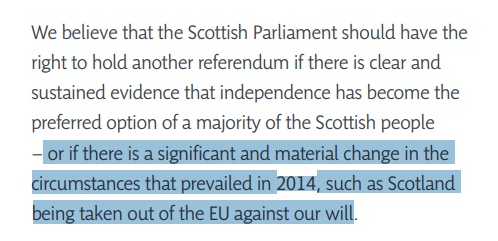
The SNP campaigned in 2016 on an explicit pledge to have a new vote if Scotland was dragged out of the EU despite voting to Remain, and they won the election and formed the government, having secured more MSPs than Labour, the Tories and the Lib Dems put together (63-60).
They then put their manifesto pledge to the Parliament, which voted for it by a clear majority of 54% to 46% (almost exactly the reverse of the 2014 referendum, routinely described by Unionists as an “overwhelming” majority).
Finally they campaigned on the same pledge in the 2017 UK general election, where they again won more seats than the three Unionist parties combined (35-24).
So that’s a pretty clear triple democratic and political mandate in any parliamentary democracy: a majority of MSPs, a majority of Scottish MPs and a majority of the Scottish Parliament. But since Jo Swinson doesn’t seem to recognise it, we wondered if she maybe just didn’t know what the word meant.
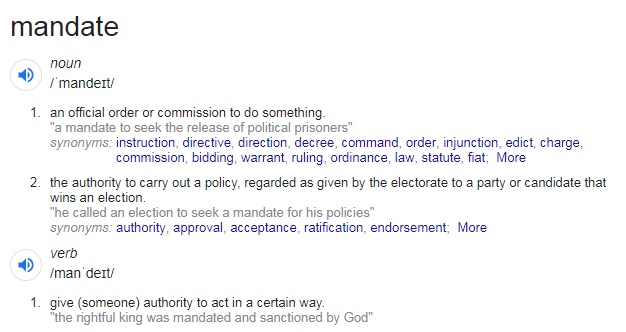
Seems clear enough. So we thought we’d come at it from the other angle and see what sort of mandate the Lib Dems had to demand a second EU referendum. And, well, it’s rather less solid.
The 2017 UK general election was conducted almost a year after the Brexit vote, and represented an ideal opportunity for the British public to change its mind about its decision to leave. The Lib Dem manifesto was unequivocal:
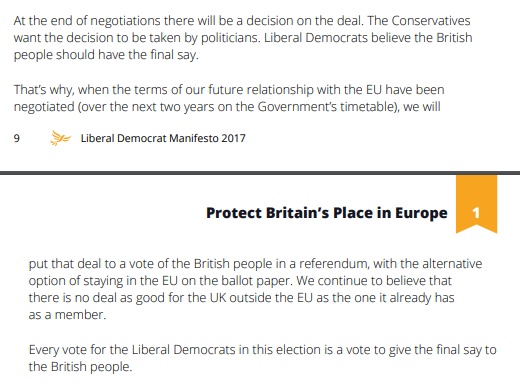
It expressly promised a second referendum between leaving (on the negotiated deal) and remaining, with the party advocating the latter even before knowing what the deal was. With both the Tories and Labour campaigning on manifestos pledging to carry out Brexit without a second vote, the Lib Dems had the Remain vote (in England, at any rate) all to themselves.
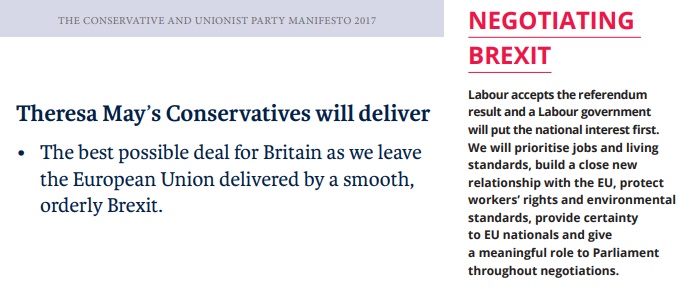
So how did that work out?

Oh. With 48% of the electorate to aim at and no competition outside of Scotland for Remainers, the Lib Dem vote and vote share nevertheless both went DOWN in 2017 – incredibly, even compared to their absolutely disastrous mauling in 2015 – and while the vagaries of the UK electoral system actually gave them slightly more seats, they still secured just a pitiful 1.8% of the Westminster benches (compared to the 59% of Scottish seats the SNP won).
The Lib Dems don’t run in Northern Ireland (where the pro-Brexit DUP won more votes and more seats than the anti-Brexit Sinn Fein, and the DUP’s vote increased by more) and have never had a significant presence in Wales, although they still managed to lose almost a third of their vote in the latter, dropping to a dismal 4.5% and 0 seats.
Ironically, then, the only part of the UK where any sort of electoral mandate exists for a second EU referendum is Scotland – where a far stronger one also exists for a second indyref, which makes life very awkward indeed for the Lib Dems demanding one but not the other.
Even this year’s European elections, widely touted as a triumph, brought the Lib Dems less than 20% of the vote, and all anti-Brexit parties combined barely 40% – no mandate for anything in an election where hardline pro-Brexit parties (even if you exclude Labour) got 44%.
Jo Swinson, then, is in absolutely no position to lecture anyone else about a lack of mandate. The best performance her party has recorded since the indyref is HALF of the SNP’s worst vote share in the same period, and at no point have Remain parties ever won more votes or seats in a UK election than Brexit parties. While the SNP have a demonstrable triple mandate to wield, Swinson has literally nothing.
We keenly await her next attempt to explain that away.


