


It’s always nice to see Michelle Mone in the news again, especially when the Tory peer crowbars an attempted intervention into Scottish politics into everything she does.
And since there’s not much else going on, it seemed like a good excuse to have a wee delve into what she’s been up to lately.
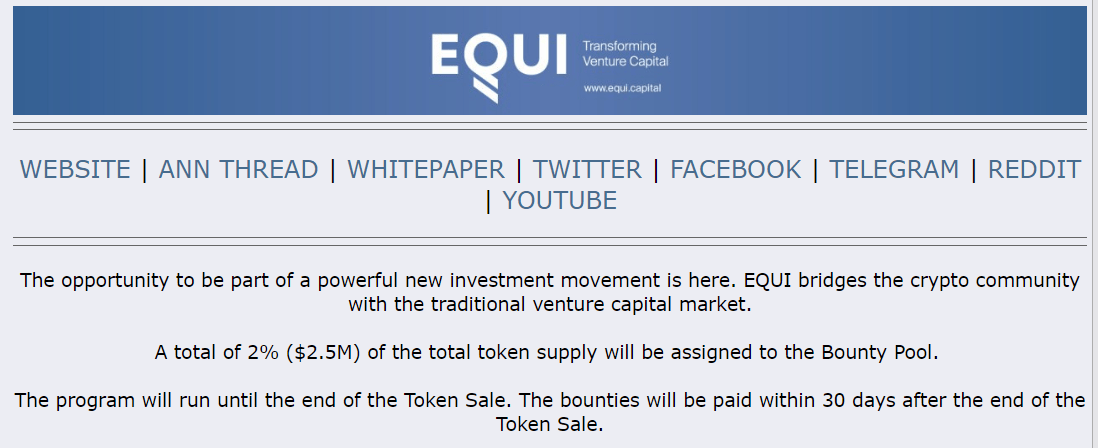
It was billed as a “once in a generation new way of thinking” and “a chance to be in at the ground level on a powerful new investment movement”.
Instead, the newest venture launched by the woman who bills herself as “Baroness Michelle Mone of Mayfair OBE”, since the failures of her lingerie, fake tan and dodgy-diet-pills companies – this time alongside millionaire new boyfriend Doug Barrowman – has left workers out of pocket and been forced to rethink its ambitious plans.

Promoters were shocked to learn that despite toiling for Equi Capital over a five-month period, the company would pay the 3,000-strong workforce not the $2.5m it had advertised, but a somewhat reduced “bounty pool” of just £4,273.37 – equating to £1.40 per person, or around 1p a day.
Workers claim they have yet to receive even that derisory sum from Equi Capital, and have branded the business “a scam project”. Aggrieved promoters are now seeking redress as an inquisition into the failed cryptocurrency scheme begins.


The former lingerie tycoon can never be accused of lacking confidence. She stood side by side with Barrowman in London’s Dorchester Hotel earlier this year to announce the launch of Equi Capital, an initial coin offering (ICO) that sought to raise $75m. In exchange for contributing a minimum of $100,000 (£72,000) in a pre-sale, commencing on March 1, or upwards of $100 in a public sale starting a week later, investors would be issued with EQUI tokens.
“Equi is that disruptor in venture capital investing and, for me, represents the final evolution of a lifetime’s work spent in the industry,” founder Barrowman claimed. But Mone’s take was rather earthier:

Puff pieces in publications including The Telegraph, The Sunday Times and Forbes, some of which amounted to little more than hagiographies, helped raise awareness of the project.

“We’re not in it for money,” Baroness Mone told the Sunday Times in March, somewhat contradicting her comments of just a month earlier. “We’re doing this because we’re passionate about the cryptocurrency community.”
Indeed, in between the two articles Mone had declared herself to be “one of the biggest experts in cryptocurrency and blockchain”, despite having only taken an interest in the field five months earlier.

While many media outlets lapped up her soundbites unquestioningly, a handful were less convinced, expressing concern over both the viability of the project and the character of its co-founder.
Bitcoin.com wrote:
(The deleted Sky story can be found archived here.)
Other media outlets began to take a less fawning approach, with the Daily Mail sharing concerns over the unregulated nature of the tokens Equi would be issuing. It quoted Labour MP John Mann, member of the Commons Treasury Select committee, as saying: “You would be better going off to the bookies than investing in this scheme”.
Under US law, investments such as Equi Capital that promise investors a profit share constitute securities and fall under the jurisdiction of the SEC. The Equi team believed it had circumvented this restriction by ensuring its tokens weren’t sold to US investors, but there remain concerns as to the legality of offering tokens to unaccredited investors in the UK, where the FCA regulates the selling of financial services.
Equi Capital remained undaunted, however, and defiantly pressed ahead with its Initial Coin Offering. On 6 February this year, one month prior to its commencement, it announced a $2.5m bounty campaign.

“Bounty hunters” are effectively unpaid marketers, often from developing countries, who help to raise awareness online, particularly among the cryptocurrency community. In return for their efforts, they are remunerated in the form of tokens.
Thanks to the promised bounty package of up to $2.5m, Mone and Barrowman enticed a significant number of workers to promote Equi Capital online. Some of the workers posted adverts on social media platforms and others created YouTube videos, while yet more translated Equi marketing materials into Spanish, Italian, German, French, Korean, Portuguese, Arabic, Indonesian, Turkish, Russian, Japanese and Chinese.
On March 30, Mone announced to her Twitter followers that Equi Capital had raised $7m (£4.9m) in its first five days of fundraising.

It’s common for popular ICOs to sell out in a matter of hours or even minutes due to oversubscription from eager investors and the sense of FOMO (Fear of Missing Out) this creates. One venture called Bancor raised $153m in three hours last June, for example, while BAT raised $35m in 30 seconds for a new web browser.
The Equi ICO was scheduled to last for one month, but within a week it had become clear that the team were nowhere near their ambitious $75 million target. The company extended its deadline, rather creatively describing the measure as “good news”, and continued to fundraise for a further two months until June 30.
Despite promising transparency, Equi failed to publicly update investors or bounty team members on its financial progress during this period. Behind the scenes, it was evident that the project would be unable to raise more than a fraction of its ambitious target, despite the concerted efforts of its thousands of bounty hunters.
While its token sale floundered, Lady Mone jetted off to Monaco to invest some of Equi’s capital in sponsoring a water bike challenge.

Two weeks later, the Equi crowdsale closed, and the project – which hasn’t published an update since April 5 in its blog or tweeted about the ICO since May 30 – was wrapped up.

The only signs of life were in the Equi group on messaging service Telegram, which filled with bounty hunters wondering when their promised tokens would arrive.
Meanwhile, Equi contacted the investors who had participated in its abortive token sale to offer a refund, since it had failed to meet the minimum funding threshold required.
“We have made the decision to refund your investment, to give you the opportunity to re-evaluate your investment having seen the new Global strategy,” wrote Baroness Mone in an email. “When we launch our new Global strategy… this time I know it will create a Global frenzy so you will not be left out.”
She also described the forthcoming relaunch as “mega exciting”.
While refunds were being processed, Equi fobbed off bounty hunters with excuses for over a month, before eventually informing them that Equi had changed its business plan and that it no longer involved using them or paying them as advertised.
(For perspective, 2% of the $7m that was raised in the first five days alone would have amounted to $140,000 in bounty payments. The total amount that was actually paid to the bounty hunters was around $5,500 between them.)


In a chat group for the Equi Capital bounty team, workers were told: “Our new concept will only allow participation from sophisticated investors. The change to the concept means that bounty members such as yourselves are not able to participate in the project going forward.”
The global workforce, which included a large contingent from developing nations, were left stunned at the outcome of a project led by a woman who some – perhaps not grasping the complexities of the British honours system – had mistakenly believed be a member of the Royal Family.
When Baroness Mone announced the launch of Equi Capital, a series of slick and professional promotional videos had done nothing to dispel the notion.
Her Twitter account during the fundraising period highlighting visits to Buckingham Palace, and in one YouTube interview she looked directly into the camera and introduced herself saying, “My name is Baroness Mone of Mayfair… I was made a Baroness by Her Majesty the Queen.” She went on to add “The House of Lords is the Upper House of Government and I’m there for life.”

Business partner Doug Barrowman runs a number of businesses including Watchdale Limited, a tax-avoidance subsidiary of The Knox Group which relocated to Panama in 2017. Prior to 2011 the company offered its clients “disguised remuneration” packages known as EBTs. In Scotland, of course, EBTs are best known for the HMRC legal case brought against Rangers Football Club which eventually resulted in its death and liquidation in 2012.
The Equi Capital bounty group on Telegram, where participants shared their marketing progress and filed claims for tokens they were owed, has now been deleted and bounty members who publicly complained about their treatment threatened with legal action in extraordinary exchanges reminiscent of a school playground.


The account administrator, operating on behalf of Equi, tried to assuage the fears of disgruntled bounty hunters, writing: “Our founder is a baroness and I can assure you she doesn’t lie” before dismissing their efforts altogether, claiming: “We raised all the money through our contacts FACT”.


On Aug 5, seven months after the launch of Equi Capital, Michelle Mone announced to her Twitter followers that she would be flying to Silicon Valley for Equi’s new “global” business launch, using the same term with which she had referred to the existing project when launching it back in January.
Equi Capital has now been hastily rebranded as Equi Global as the project attempts to conceal its failed token sale and prepare for a new ICO under a new banner. Having alienated a vast swathe of the cryptocurrency community as well as the investors who contributed to its ICO, Equi may struggle to pull a rabbit out of the hat at the second time of asking.
Doug Barrowman described Equi Capital as a way to “give everyone an opportunity to play in my world”. Those who still await any recompense for their time and effort may wish they hadn’t played at all.
Still, at least now we know why Baroness Lady Mone OBE is in such a prickly mood at the moment. We wonder how long it’ll be before she somehow contrives to blame the SNP for her latest flop.


