



New housing estates in Scotland have been branded “car sick” because they pander to drivers at the expense of pedestrians, public transport and bikes.
A study to be published this week criticises new developments in Glasgow, Edinburgh, Dundee and West Lothian for poor pavements, limited bus services and a lack of links for walkers and cyclists.
The walking charity, Living Streets Scotland, is warning that councils will face “massive problems” in the future because new estates are designed for cars not people. Councils are failing to learn from past mistakes, it says.
Councils, however, dispute the findings, listing the many pedestrian-friendly facilities that are provided. They insist that they are “prioritising” pedestrians, public transport and cycling.
The 52-page study, written by Living Streets Scotland for the environmental transport group, CoMoUK, examined sustainable transport facilities at Athletes’ Village in Glasgow, West Pilton Crescent in Edinburgh, Whitfield in Dundee and Winchburgh in West Lothian.
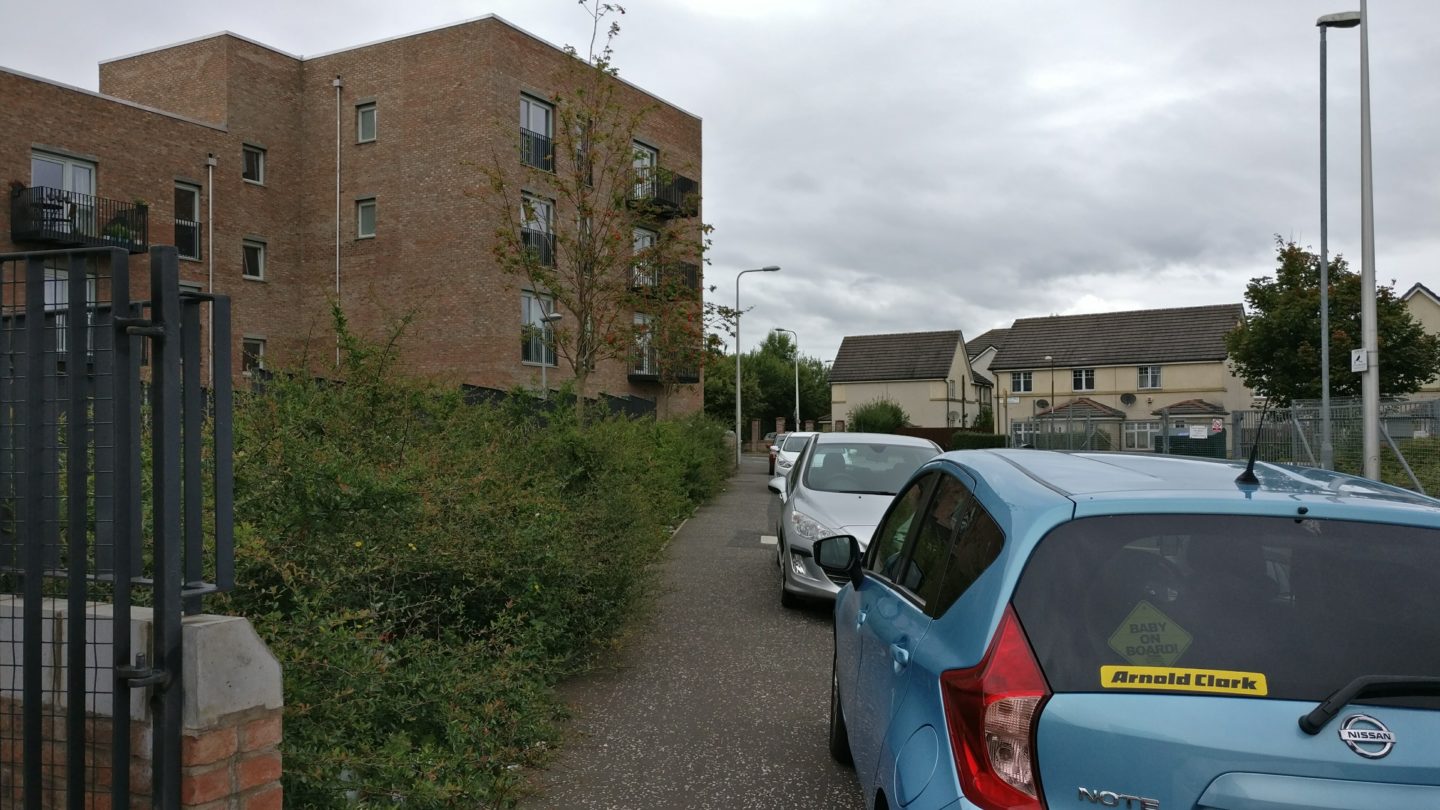
They all had pavements or paths “missing”, three lacked road crossing points and three suffered from “pavement parking”. Winchburgh was said by residents to have inadequate bus services, while Whitfield and West Pilton Crescent suffered from traffic congestion at schools.
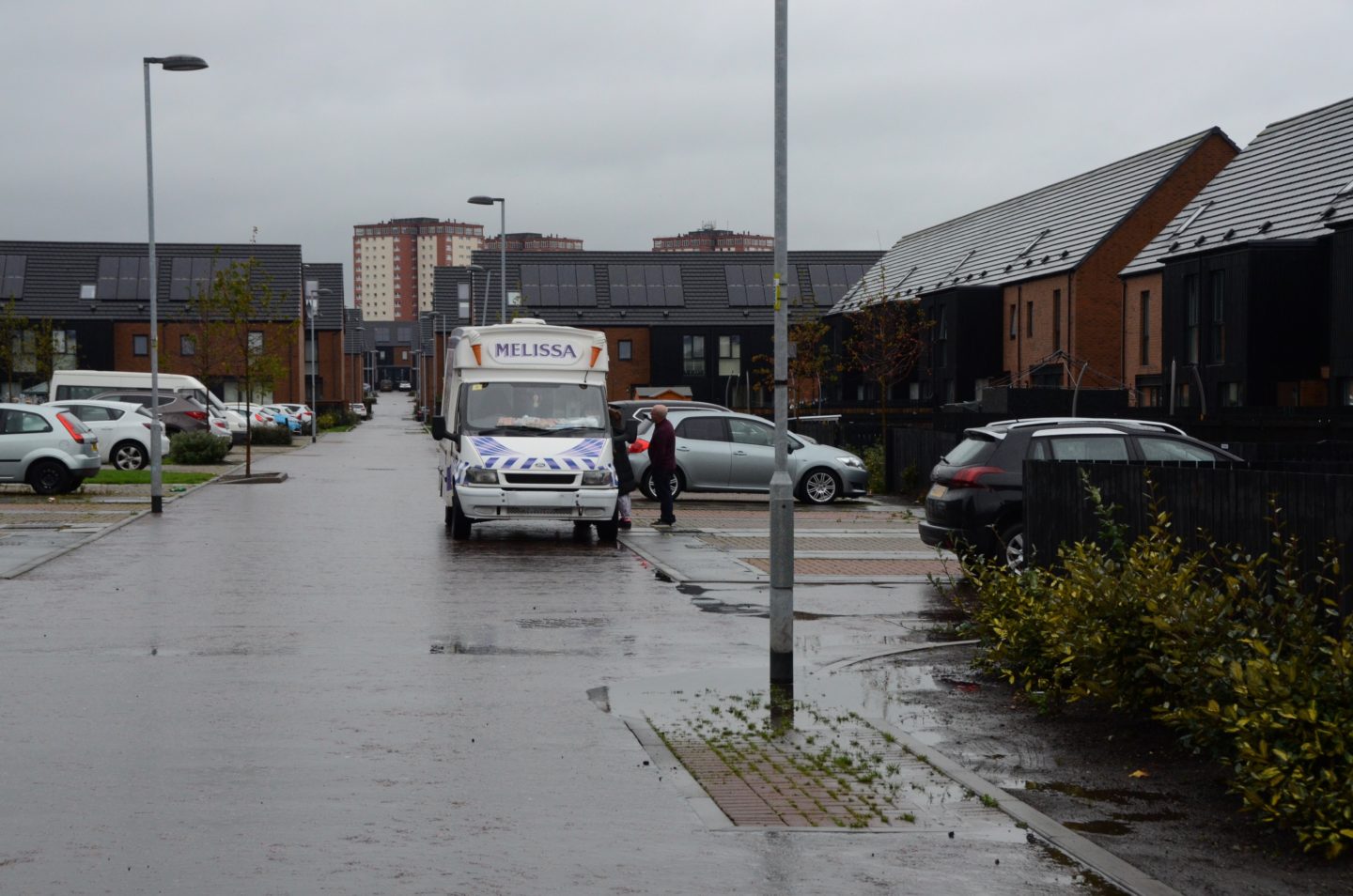
Athletes’ Village was criticised by residents for having to rely on a visiting ice cream van for shopping. The area was “needing shops” as the nearest supermarket was “too much of a walk for disabled and elderly,” said one local.
Just one new housing estate – at Chapleton in Aberdeenshire – was commended by the study. It had the “potential to be an exemplar of a walkable, well designed and well connected development,” it concluded.
It benefited from shops and services within walking distance, “a pedestrian friendly environment” and “high quality public space”, the study said. It also had a “proliferation of crossing places” and “clear travel plans for supporting public transport”.
Chapelton was marketed in November 2017 as “pedestrian friendly”, with a “regular bus service” and “integrated public transport”. This contrasted with Winchburgh, which was promoted as “ideally located” for commuters to Edinburgh, Livingston and Falkirk – and only seven miles from Edinburgh airport for “international jet-setters or London commuters”.
According to Living Streets Scotland, new housing developments were “leaving Scots car sick”. It pointed out that a third of households in Scotland don’t own a car, and has demanded simple, low-cost measures from developers, such as better footpaths.
“Local planning departments are storing up massive problems in terms of congestion, air pollution and inactivity by building car-dependence into new housing developments,” said the charity’s director, Stuart Hay.
“People deserve a choice to walk, cycle or take public transport. Instead developers are delivering housing in the wrong places, with the wrong infrastructure, and with very poor access to local shops and public transport.”
He added: “Councils and developers should be going back to recent developments to fix issues and learn from their mistakes, something that isn’t happening at the moment.”
Developers are delivering housing in the wrong places, with the wrong infrastructure, and with very poor access to local shops and public transport.
Stuart Hay, Living Streets Scotland
CoMoUK accepted that Scotland had policies in place to reduce reliance on cars in new developments. “However this study shows there is a gap between the policy and the reality,” said the group’s Susan Jeynes.
“CoMoUK is keen to work with planners and developers to help identify how new developments can benefit from designing in shared transport, both for the residents and the economic opportunity for developers.”
The Scottish Greens argued that the process for building new homes was dominated by the private sector. “Communities have had little say on what works best for them or their transport needs,” said the party’s housing spokesperson, Andy Wightman MSP.
“To build sustainable communities we need to ditch this model and adopt community led public master-planning and development to develop the communities that people want to live in.”
The Convention of Scottish Local Authorities (Cosla) stressed that building more homes and developing active travel were both important. “The local planning process ensures new homes are built in the right places and there are guidelines for designing streets and providing active travel links,” said a Cosla spokesperson.
“While we recognise that this system is not perfect in Scotland, local authorities work hard to ensure that local housing needs are met appropriately and are recognised within up-to-date local development plans, encouraging active travel where possible.”
Glasgow City Council pointed out that the Athletes’ Village had a doctor’s surgery, a pharmacy, a dental surgery and a community hub nearby. “A new £22.8 million primary school will open within the village next year and a new council nursery for 150 children aged 0-5 years opened last year,” said a council spokeswoman.
“Two major supermarkets, The Forge shopping centre, a cinema, a local shop, hairdressers, a football stadium and bowling club are all within walking distance of the village. Residents can easily cycle to the city centre in 15 minutes using a segregated cycle route.”
She also pointed out that there was a railway station two minutes walk away, where bikes could be hired. “Tollcross Park, swimming pool and children’s city farm are also a five minute cycle away,” she added.
While we recognise that this system is not perfect in Scotland, local authorities work hard to ensure that local housing needs are met appropriately.
Spokesperson, Convention of Scottish Local Authorities
City of Edinburgh Council agreed that active travel was a “top priority”, and highlighted its cycling, bus and tram services. “We recognise that we still have work to do – this will be the focus of the forthcoming city mobility plan, which we will be consulting on in autumn,” said a council spokesperson.
In West Pilton “every effort is being made to encourage active travel”. Tenants will be offered a welcome pack with public transport vouchers and vehicle parking was “not excessive”.
West Lothian Council disagreed with the study’s criticisms of Winchburgh. The development had “proposals for an extensive system of pedestrian, cycle, horse and public transport networks and initiatives,” said a council spokesman.
New facilities and public transport improvements “should maximise the opportunity for residents to access education, employment and services by walking, cycling or sustainable public transport,” he added.
“Developers and the planning authority have also been working over the last 10 years with Transport Scotland and Network Rail to provide for a new train station at Winchburgh.”
A spokesperson for Dundee City Council said: “We will be looking at the full details of Living Street’s study and discussing their recommendations when we receive a copy of the report.”
Homes for Scotland, which represents house building companies, insisted that sustainability was an integral consideration in new residential development. “Laying this at the door of those providing much needed new homes is too simplistic a response, with much of that referred to outwith the control of developers,” said chief executive, Nicola Barclay.
“Rather, this involves a range of different stakeholders and includes issues such as the allocation of land, policy on street design, the provision of supporting infrastructure and the requirements of individual local authorities.”
Barriers at four housing estates – and benefits at one
Poor: Whitfield, Dundee
- “missing pedestrian and cycling infrastructure”
- “lack of crossing points/missing pavements”
- “pavement parking”
- “significant traffic congestion at school drop off/pickup”
- “lack of path maintenance”
Poor: Winchburgh, West Lothian
- “no crossing points”
- “missing pavements”
- “missing pedestrian infrastructure”
- “pavement parking”
- “bus services do not meet local needs”
Poor: West Pilton Crescent, Edinburgh
- “missing pavements – pavement parking”
- “anti-social behaviour on cycle path”
- “lack of maintenance of cycle path”
- “school drop off/pick up congestion”
- “no marked disabled parking”
Poor: Athletes’ Village, Glasgow
- “no local shop, reliance on visiting ice cream van”
- “no lighting on sections of traffic-free paths”
- “missing pedestrian links/footways”
- “crossing points not finished”
- “parking issues for residents”
Good: Chapelton, Aberdeenshire
- “all shops and services planned to be within walking distance”
- “high levels of satisfaction with household parking”
- “a pedestrian friendly environment”
- “high quality public space and paving”
- “proliferation of crossing places”
- “high quality traffic free paths”
- “clear travel plans for supporting public transport”
source: Living Streets Scotland
Photos thanks to Living Streets Scotland, Shona McMillan and Moira Tasker. A version of this story was published in the Sunday Herald on 29 July 2018.

